What people actually mean when they search for an AWS alternative
When someone searches for an AWS alternative they are usually frustrated by one of three things: cost, complexity or control. They are not always looking for a drop in replacement for every managed service. More often they want a simpler way to host websites, APIs, databases or game servers without juggling dozens of cloud services and unpredictable usage billing.
A traditional server based alternative focuses on giving you:
- Virtual servers with dedicated CPU, RAM and storage.
- Full root access so you can configure the environment as you wish.
- Fixed monthly pricing that is easy to forecast.
- Strong network performance and DDoS protection.
- A known physical location, in this case a UK data centre.
Instead of building around provider specific managed services, you run your own stack on a stable platform. That makes lift and shift migration easier, improves cost visibility and removes a lot of vendor specific lock in.
Public cloud versus a VPS based AWS alternative
Public cloud pricing is designed for maximum flexibility. That is powerful when you spin workloads up and down frequently. It is less ideal when your workloads are always on and relatively predictable.
| Hyperscale public cloud | This platform | |
|---|---|---|
| Compute billing | Per second or per hour | Fixed monthly price per server |
| Storage billing | Per GB, plus provisioned IOPS | Included in the plan |
| Outbound data | Per GB egress | Transfer allowance included in the plan |
| API and request charges | Per request or per million operations | None |
| Forecasting 12 to 36 months | Requires usage modelling | Multiply by the number of months |
| Traffic spikes | Billed as extra usage | Absorbed within plan headroom |
| Scaling to zero | Supported | Not applicable |
| Global regions | Worldwide | UK only |
You choose a plan with a set amount of CPU, RAM, storage and bandwidth, and you pay a fixed monthly price. Your bill does not change because a month had slightly more visitors or one API endpoint was called more often. As a result:
- Budgeting over 12 to 36 months is far simpler.
- You can align infrastructure cost with product pricing more confidently.
- Spikes are handled within your plan headroom rather than billed per extra request.
- Bandwidth costs are easier to understand and much less likely to surprise you.
If you are unsure which model is cheaper, map out your last few months of usage. If your applications are online continually and rarely scale down to zero, a server based alternative often comes out ahead over the medium to long term.
When an AWS alternative is the better call
The best way to decide is to ignore the marketing and look at your actual workload profile.
-
Stay on hyperscale cloud if you
Need global regions close to users around the world. Depend heavily on managed proprietary services. Run many short lived or bursty workloads that benefit from autoscaling down to zero. Have a large team already trained around one cloud ecosystem.
-
Move to this platform if you
Serve primarily UK and European users. Run steady 24/7 workloads such as SaaS, websites or game servers. Want predictable monthly infrastructure costs. Prefer direct control of servers and standard tooling over deep vendor lock in. Care about low latency and game focused DDoS protection.
In many cases the most sensible strategy is a hybrid. Keep workloads that genuinely need hyperscale on a cloud provider, and move stable, region specific services onto a simpler alternative. That way you get the best of both models without overpaying for capacity that does not need to sit on a giant global cloud.
Share a summary of your current infrastructure with us and we will outline where a move would make sense and where it would not. No fluff, just practical guidance.
Simple UK plans as your AWS alternative
No complex usage calculators and no surprise egress bills. Just fast virtual servers with clear pricing for steady workloads, game servers, web apps, APIs and internal tools.
| Monthly | Plan | Tier | Best for | CPU | RAM | Storage | Port | Order |
|---|---|---|---|---|---|---|---|---|
| £0.64 Was £0.99. From £0.50 annually. |
Nano | Starter | Testing, bots and utilities | 1 vCPU Core | 512MB | 5GB NVMe SSD | 100Mbps | Order |
| £1.62 Was £2.49. From £1.25 annually. |
Starter 1 | Starter | Light web apps and services | 1 vCPU Core | 1GB | 20GB NVMe SSD | 1Gbps | Order |
| £2.59 Was £3.99. From £2.00 annually. |
Starter 2 | Starter | Small websites and projects | 1 vCPU Core | 2GB | 30GB NVMe SSD | 1Gbps | Order |
| £3.24 Was £4.99. From £2.50 annually. |
Starter 3 | Starter | Production ready workloads | 2 vCPU Cores | 3GB | 40GB NVMe SSD | 1Gbps | Order |
| £3.89 Was £5.99. From £3.00 annually. |
Essential | Professional | Small production projects | 2 vCPU Cores | 4GB | 60GB NVMe SSD | 5Gbps | Order |
| £6.49 Was £9.99. From £5.00 annually. |
Advanced | Professional | Apps, APIs and game servers | 4 vCPU Cores | 8GB | 120GB NVMe SSD | 5Gbps | Order |
| £10.39 Was £15.99. From £8.00 annually. |
Business Most popular | Professional | Growing workloads and teams | 6 vCPU Cores | 12GB | 180GB NVMe SSD | 5Gbps | Order |
| £13.64 Was £20.99. From £10.50 annually. |
Growth | Professional | High traffic applications | 8 vCPU Cores | 16GB | 240GB NVMe SSD | 5Gbps | Order |
| £15.59 Was £23.99. From £12.00 annually. |
Enterprise | Enterprise | Large applications and data | 10 vCPU Cores | 20GB | 300GB NVMe SSD | 5Gbps | Order |
| £16.89 Was £25.99. From £13.00 annually. |
Performance Best value | Enterprise | Maximum VPS performance | 12 vCPU Cores | 24GB | 300GB NVMe SSD | 5Gbps | Order |
| £18.85 Was £29.00. From £14.50 annually. |
Power | Enterprise | High core count workloads | 16 vCPU Cores | 32GB | 300GB NVMe SSD | 5Gbps | Order |
| £38.35 Was £59.00. From £29.50 annually. |
Extreme | Enterprise | Ultimate VPS power | 32 vCPU Cores | 64GB | 600GB NVMe SSD | 5Gbps | Order |
No cloud complexity
Fixed monthly pricing that makes sense as an AWS alternative for steady, always on workloads.
Easy scaling
Scale vertically to a larger plan in a few clicks, without rearchitecting your application or changing provider specific services.
Predictable bandwidth costs
Generous transfer included as standard, so you do not get caught out by per GB egress charges.
Why choose our platform as your AWS alternative
Public cloud is great at global hyperscale and hundreds of managed services. Most real world projects do not need that. They need fast servers, low latency, clear pricing and support that has time to help.
-
Lower data transfer costs
Cloud egress can quietly become the biggest line on the bill. Our plans include generous transfer allowances with clear, predictable pricing. Ideal for APIs, downloads, game assets and media heavy sites that are expensive to host on usage based clouds.
-
High performance, not oversold
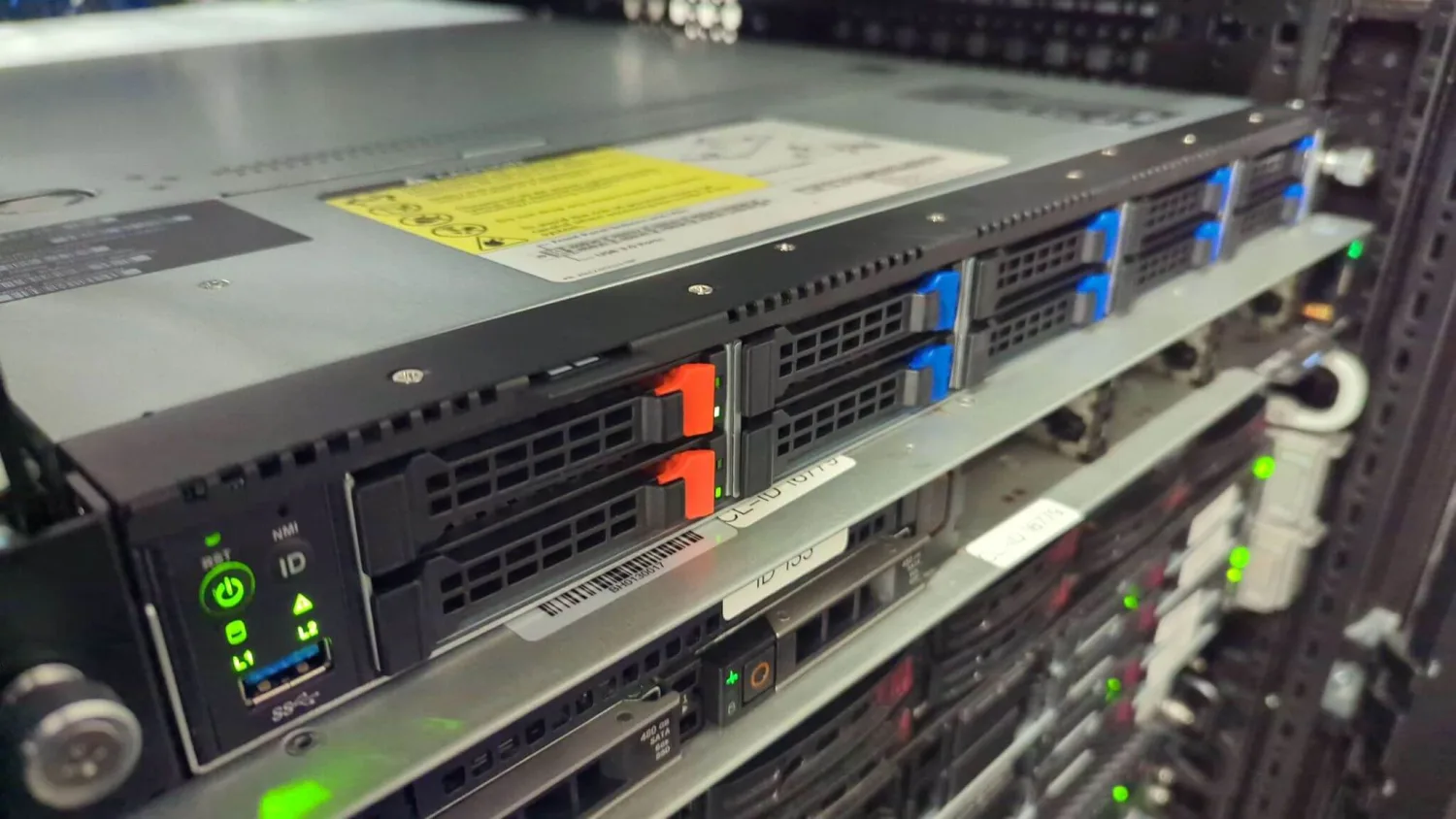
Each server runs on high frequency Ryzen hardware with NVMe SSD storage. Because we are not trying to squeeze thousands of tiny instances onto shared clustered storage, your applications see consistent low latency disk and CPU performance.
-
Game focused DDoS protection
Our anycast DDoS platform is tuned for latency sensitive workloads such as game servers, voice and real time applications. You can deploy application level filters that block attack patterns while keeping legitimate players online, which is difficult to replicate in generic public cloud setups.
-
Solely UK hosted
All infrastructure is located in UK data centres. That means tight control of data residency, low latency for UK and European users, and a provider that understands the local network landscape. No guessing which region your data ended up in.
-
Simpler architecture
Instead of stitching together dozens of managed services, most workloads run happily on a small fleet of well specified instances. Fewer moving parts to monitor, fewer failure modes, and a stack your team can actually understand end to end.
-
Hands on UK support
You are not pushed into community forums or low priority tickets. Our engineers build and run this platform daily. When something does not behave as expected you can talk to someone who understands virtualisation, networking and game workloads.
-
Traditional VPS, no hidden lock in
A VPS is a KVM virtual machine with full root access. You can back it up, move it or rebuild it using standard tooling. You are not tied to proprietary APIs or managed services that make migration painful. If you ever need to leave, you can do so on your own terms.
-
Full root access and freedom
Install what you like, configure your stack exactly as you want, and use the tooling your team already knows. You are not restricted to images and wizards. If it runs on Linux or Windows, it will almost certainly run here.
Performance and architecture differences
Many tiny instances on network storage, or fewer larger machines on local NVMe. The trade is flexibility against latency.
On hyperscale cloud it is common to run tiny instances connected to network storage alongside a wide range of managed services. The trade off is flexibility and ease of integration over raw performance. A server based alternative turns that model around. You get fewer, larger virtual machines running on fast local NVMe storage and high frequency CPUs.
For many applications that has practical benefits:
- Database queries complete faster because storage latency is lower.
- Game servers and real time applications see more consistent tick rates.
- Background jobs and build pipelines complete in less time.
- Network jitter is reduced because your traffic stays within a focused UK environment.
You can still scale horizontally by adding more instances and load balancing between them. The difference is that you are not forced to rearchitect everything to match one provider's way of doing things. You use standard tooling and patterns that will still make sense years from now, even if you change host.
Why high clock speed over core count: most workloads care more about single core performance than sheer core count. High frequency Ryzen processors deliver strong per thread performance for web servers, databases and game hosts, so applications feel snappy without exotic instance types.
On the network: the core is built around high throughput switching with up to 10 Gbps uplinks per node. Combined with smart routing and anycast DDoS protection you get stable latency and headroom for bandwidth heavy applications, without watching every gigabyte consumed.
Planning a move away from complex cloud pricing? See the full UK VPS range or talk to us about migrating.
One estate, no region roulette
There is no menu of thirty regions to model. Everything sits in UK data centres behind an anycast network tuned for latency sensitive traffic.

- Core
- Edge
- Fibre route
 Hosted solely in UK data centres
Hardware you can actually ask about
CPU family, storage medium, uplink speed, physical location. A hyperscaler abstracts all of it away by design. We would rather just tell you.
-
Named silicon
High frequency AMD Ryzen with NVMe SSD, not an opaque instance family letter and a credit score.
-
Leaving is a normal operation
A KVM virtual machine with root access can be imaged, copied and moved with standard tooling. There is no proprietary exit tax.
-
Engineers on the ticket
The people who run the platform answer the questions, rather than a support tier that reads from the same docs you already found.
Where a VPS is the better AWS alternative
These are the situations where our UK platform is usually the smarter choice.
-
Websites and web apps
Host marketing sites, SaaS applications, client portals and internal tools on a handful of instances instead of a complex mix of load balancers, autoscaling groups and managed databases. You keep direct control of the stack and avoid unpredictable usage billing.
- PHP / Laravel
- Node.js
- Django
-
Databases and caching
Run MySQL, MariaDB, PostgreSQL or Redis on high performance NVMe backed instances. For steady workloads this is often cheaper and simpler than managed cloud database products, while still giving excellent real world performance and resilience.
- MySQL
- PostgreSQL
- Redis
-
Game servers and real time apps
Low latency is everything for game servers and real time applications. Our UK edge, anycast DDoS filters and high frequency CPUs are built with this in mind. You get predictable performance and protection without stitching together multiple cloud networking services.
- Rust
- Minecraft
- FiveM
-
Dev, staging and CI
Spin up isolated environments for development, staging and testing on dedicated instances. Keep pipelines fast and costs under control, without tracking dozens of small cloud services that all bill separately.
- CI runners
- Staging
- QA
-
VPN, security and internal tools
Run WireGuard, OpenVPN, bastion hosts, monitoring and logging stacks on a small number of nodes. Fixed monthly bills instead of worrying about traffic, requests or retention affecting your invoice at the end of the month.
- WireGuard
- OpenVPN
- Monitoring
-
Small to medium SaaS
If your SaaS platform serves a defined region such as the UK or Europe and has predictable baseline load, this is often the best balance of cost, simplicity and performance. You can still scale horizontally across multiple nodes when growth demands it.
- SaaS
- APIs
- Microservices