What an edge server is, in plain terms
Technically it looks like a standard VPS. What changes is where it sits, and therefore how many hops a request has to make.
An edge server is a server that sits closer to end users than a traditional cloud region or central data centre. Instead of sending every request to a far away location, you run code, cache data and process events on a machine that is geographically closer to the user or device.
Technically an edge server often looks like a standard VPS or bare metal server. The difference is how you design and place it. Edge infrastructure focuses on short network paths, lower latency and many smaller points of presence rather than a few huge central hubs.
In practice you might use edge servers to:
- Handle user facing traffic such as game sessions or API calls close to players and customers.
- Cache static and dynamic content so it loads faster and uses less upstream bandwidth.
- Process telemetry and events locally so you can react in real time.
- Enforce security policies and filtering before traffic touches your core systems.
Edge servers vs traditional cloud and CDN
Edge servers sit somewhere between classic VPS hosting, centralised cloud and pure CDN services. The distinction matters when you are deciding what to move.
| Centralised cloud | CDN | Edge servers | |
|---|---|---|---|
| Runs your own code | Yes | Limited | Yes |
| Caches static content | Only if you build it | Yes, by design | Yes |
| Handles sessions and state | Yes | No | Yes |
| Full root access | Yes | No | Yes |
| Distribution model | A few large regions | Many cache nodes | Many small compute nodes |
| Best at | Central data and control planes | Static asset delivery | Latency sensitive user facing logic |
Against traditional cloud servers
Traditional cloud servers usually run in a small set of big regions. You might have one region in London and another in mainland Europe, and everything for that region is centralised there. Edge servers still run as virtual or physical machines, but they are deployed closer to users. Instead of one monolithic deployment, you run many small instances at the edge that handle user traffic, while core services stay central.
Against a CDN
A CDN uses geographically distributed nodes to cache and deliver static content such as images, scripts and downloads. Edge servers can behave like programmable CDN nodes. They can cache, but they can also run custom application logic, process requests, handle sessions and push events back to your core infrastructure.
When does edge deployment make sense?
Edge servers make the biggest difference where the user experience is limited by network latency rather than raw CPU performance.
-
Signal 01
Players complain about lag
Rubber banding, delayed actions and inconsistent hit registration in online games are network symptoms far more often than CPU ones.
-
Signal 02
One region is noticeably slower
API calls from clients in one region take measurably longer than from another, with no difference in the work being done.
-
Signal 03
The product needs near real time events
Your application has to send and receive events in near real time, so every round trip you remove is felt directly.
-
Signal 04
Your region is far from your users
Central cloud regions sit a long way from your main user base, adding extra network hops to every single request.
Simple, transparent edge server plans
Choose by how much traffic the node has to carry. All plans include DDoS protection, full root access and instant deployment, with predictable monthly pricing and no setup fees.
- 100Mbps Nano Edge. Latency tests and tiny workers.
- 1Gbps Edge 1 to Edge 3. Micro sites, cache nodes, small services.
- 5Gbps Essential upwards. Busy APIs, game back ends, regional platforms.
| Port speed | Plan | Tier | Best for | CPU | RAM | Local NVMe | Monthly | Order |
|---|---|---|---|---|---|---|---|---|
| 100Mbps | Nano Edge | Edge Starter | Latency tests, tiny bots, API edge workers | 1 vCPU Core | 512MB | 5GB NVMe SSD | £0.64 Was £0.99. From £0.50 annually. |
Order |
| 1Gbps | Edge 1 | Edge Starter | Micro sites, simple APIs at the edge | 1 vCPU Core | 1GB | 20GB NVMe SSD | £1.62 Was £2.49. From £1.25 annually. |
Order |
| 1Gbps | Edge 2 | Edge Starter | Edge cache nodes, small game services | 1 vCPU Core | 2GB | 30GB NVMe SSD | £2.59 Was £3.99. From £2.00 annually. |
Order |
| 1Gbps | Edge 3 | Edge Starter | Production edge applications and APIs | 2 vCPU Cores | 3GB | 40GB NVMe SSD | £3.24 Was £4.99. From £2.50 annually. |
Order |
| 5Gbps | Edge Essential | Edge Professional | Regional web apps, SaaS edge nodes | 2 vCPU Cores | 4GB | 60GB NVMe SSD | £3.89 Was £5.99. From £3.00 annually. |
Order |
| 5Gbps | Edge Advanced | Edge Professional | Busy APIs, low latency game backends | 4 vCPU Cores | 8GB | 120GB NVMe SSD | £6.49 Was £9.99. From £5.00 annually. |
Order |
| 5Gbps | Edge Business Most popular | Edge Professional | Regional platforms, multi service edge | 6 vCPU Cores | 12GB | 180GB NVMe SSD | £10.39 Was £15.99. From £8.00 annually. |
Order |
| 5Gbps | Edge Growth | Edge Professional | High traffic edge APIs and content | 8 vCPU Cores | 16GB | 240GB NVMe SSD | £13.64 Was £20.99. From £10.50 annually. |
Order |
| 5Gbps | Edge Enterprise | Edge Enterprise | Large scale regional edge platforms | 10 vCPU Cores | 20GB | 300GB NVMe SSD | £15.59 Was £23.99. From £12.00 annually. |
Order |
| 5Gbps | Edge Performance Best value | Edge Enterprise | Demanding low latency, many services | 12 vCPU Cores | 24GB | 300GB NVMe SSD | £16.89 Was £25.99. From £13.00 annually. |
Order |
| 5Gbps | Edge Power | Edge Enterprise | Heavy edge compute and analytics | 16 vCPU Cores | 32GB | 300GB NVMe SSD | £18.85 Was £29.00. From £14.50 annually. |
Order |
| 5Gbps | Edge Extreme | Edge Enterprise | Ultimate edge capacity and scale | 32 vCPU Cores | 64GB | 600GB NVMe SSD | £38.35 Was £59.00. From £29.50 annually. |
Order |
No setup fees
Provision edge servers instantly without any hidden activation or setup charges.
Fast scaling
Upgrade vCPU, RAM and storage in minutes as your edge workloads grow.
Regional focus
Host edge servers in UK data centres for the lowest possible latency to UK and European users.
Built for tick rates, not benchmarks
Edge workloads are decided by single thread speed, local disk latency and packet handling. Those are the three things this hardware is chosen for.
High frequency CPUs
Game loops, matchmaking and API handlers mostly run hot on one core. Clock speed matters more here than core count.
Local NVMe SSD
Logs, cache and game saves write to a drive in the same machine, not across a network to shared storage.
Uplink and peering
Optimised peering for UK and European eyeball networks, which is what removes the random spikes rather than the average.
Everything you need in an edge server
Edge servers need more than raw CPU. They need predictable latency, resilient networking and a control panel that makes managing distributed workloads simple.
-
High frequency CPUs
Edge workloads like game servers, matchmaking and APIs live or die on single thread performance. Our edge servers run on fast modern CPUs that keep response times tight under load.
-
NVMe SSD storage
Local PCIe NVMe storage means logs, cache data and game saves are written instantly, without the I/O bottlenecks you often see on oversold cloud instances backed by slow network storage.
-
10 Gbps node uplinks
Each edge node connects back to our core on up to 10 Gbps links, with optimised peering for UK and European eyeball networks so you get lower ping and fewer random spikes in latency.
-
DDoS protected edge
Edge servers are often front line targets. We include always on DDoS protection so volumetric attacks are absorbed before they ever hit your instance. Legitimate traffic stays online and smooth.
-
Full root access
Install your own stack, run custom daemons, tune kernel parameters and deploy containers. You get full root and SSH access on every edge server with no arbitrary software limits.
-
IPv4 and IPv6 ready
Every edge server includes dedicated IPv4 and IPv6 connectivity. Add more IPv4 addresses where justified for load balancers, anycast setups or multi tenant architectures.
-
Instant deployment
The whole point of edge infrastructure is speed. Once you order, your edge server is online in around 60 seconds ready to accept traffic, join your cluster or start processing events.
-
Snapshots and backups
Create point in time snapshots before big deployments or configuration changes. Higher plans can add automated backups so you can roll back quickly if an update goes sideways at the edge.
-
Real time monitoring
Track CPU, latency, bandwidth and disk usage across your edge fleet from a single dashboard. Spot hotspots early and scale up capacity before they affect real users.
-
Firewall and access control
Lock each edge server down to only the ports and protocols you actually need. Combine our network firewall with host level rules for proper defence in depth at the edge.
-
API friendly platform
Use our control panel or API to script creation, scaling and decommissioning of edge servers. Ideal for providers building their own platforms on top of our infrastructure.
-
24/7 edge support
Speak to engineers who understand latency, tick rates and packet loss. Whether you run a SaaS app or a large game community, we help you troubleshoot real performance issues, not just reboot VMs.
The routes your packets actually take
Edge placement is only half the job. The other half is the path from that edge node back to the core, and out to the networks your users sit on.

- Core
- Edge
- Fibre route
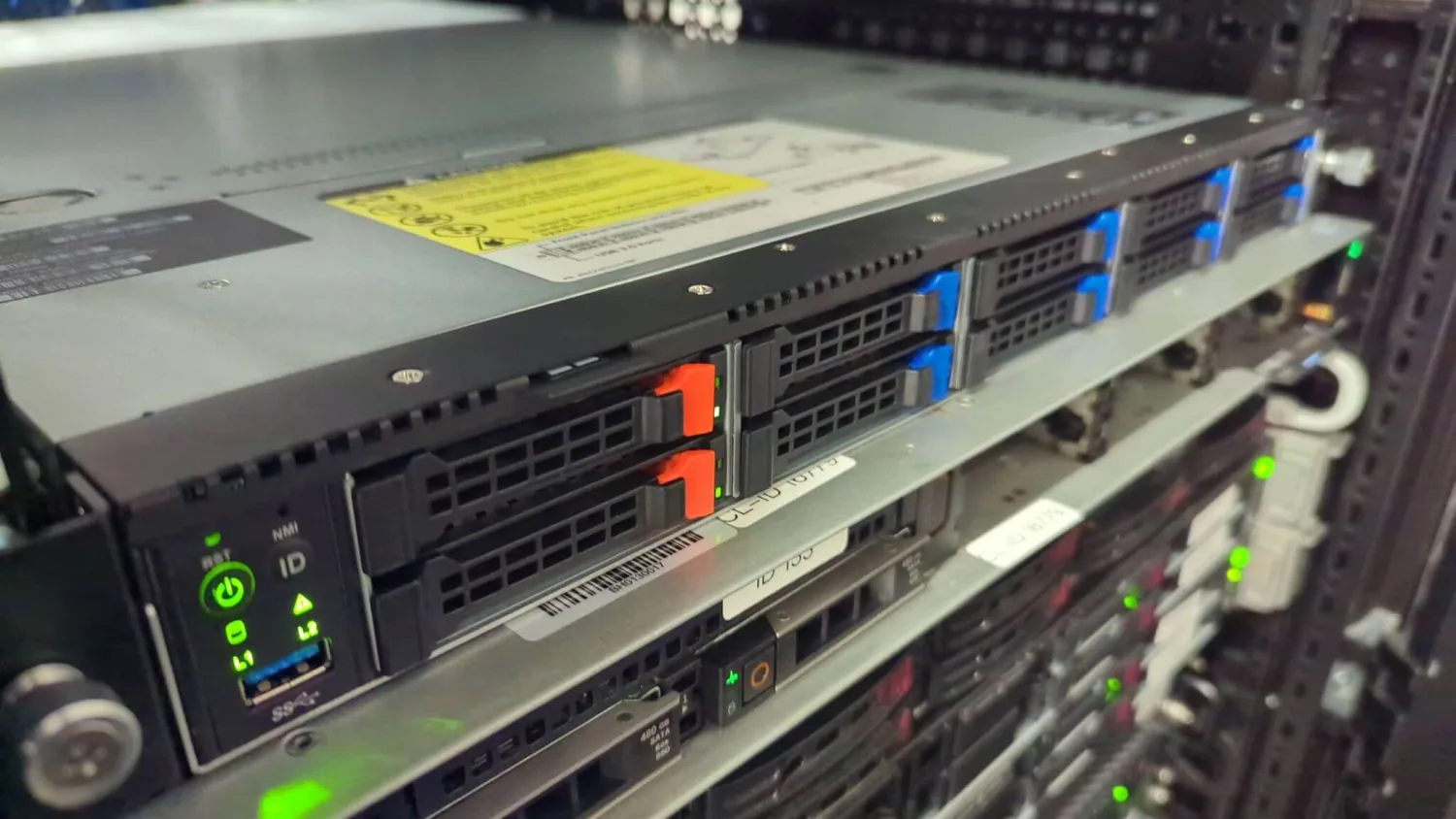 UK data centres
Real racks, in buildings we can name
Edge servers run on the same high performance platform as our UK VPS range, on hardware we own and operate, with networking tuned for low latency and high packet rates.
-
Same platform, different placement
Nothing exotic and nothing you cannot reason about. It is our VPS platform, positioned for short paths.
-
Front line by design
Edge nodes take the first hit in an attack, so inline mitigation is standard rather than an upsell.
-
Engineers who speak latency
People who understand tick rates and packet loss, rather than a script that suggests rebooting the VM.
How teams use edge servers
Edge servers are a practical way to move compute and storage closer to the people and devices that rely on your service. Here is where they earn their keep.
-
Online gaming and matchmaking
Host game servers, matchmaking services and lobby backends on UK edge servers so players enjoy low ping and stable tick rates. Ideal for Rust, Minecraft, FiveM and similar game communities.
- Low latency
- Game servers
- Matchmaking
-
Web and API edge nodes
Terminate TLS, run lightweight API endpoints, cache responses and apply rate limiting at the edge before traffic hits your core. Reduce load on central infrastructure and improve user experience.
- APIs
- Edge logic
- Offload
-
Content and asset delivery
Use edge servers as regional asset hubs for game downloads, patches, images and static site content. Shorter distance means faster first byte and happier users, especially at peak times.
- Static assets
- CDN helper
- Downloads
-
IoT and telemetry processing
Process metrics and events close to where they are generated instead of shipping everything back to a distant region. Filter, aggregate and forward only what matters to your core systems.
- IoT
- Telemetry
- Pre processing
-
Personalisation and A/B testing
Run personalisation logic, feature flags and A/B testing frameworks at the edge so decisions are made in milliseconds. This avoids extra round trips and keeps your interface feeling instant.
- Edge logic
- Feature flags
- UX
-
Security and filtering
Deploy WAF rules, IP reputation checks, geo blocking and bot detection at the edge. Stop bad traffic at the closest possible point while allowing legitimate users through at full speed.
- WAF
- DDoS
- Filtering
How to design applications for the edge
Moving to edge servers is not a lift and shift from a single region. You get the best results if you design with edge behaviour in mind.
-
Principle 01
Split core and edge responsibilities
Run matchmaking, session handling and instance management at the edge. Keep persistent storage, account data and analytics in the core. Replicate or cache small slices of data at the edge rather than entire databases.
-
Principle 02
Keep edge state small and disposable
Edge servers work best when they can be treated as replaceable. Keep persistent state in central or replicated systems and use the edge for local state that can be recovered if a node fails. That simplifies scaling and failover.
-
Principle 03
Plan for observability across the fleet
With many small nodes, visibility becomes the hard part. Ship logs and metrics back to a central system, track latency and error rates per node, and automate alerting so you know when one edge node is struggling.
Security considerations for edge hosting
Edge infrastructure increases your attack surface because you have more entry points on the network. That does not mean it has to be less secure, but you must treat security as a first class concern.
- Lock down inbound ports using our network firewall and host level rules.
- Terminate TLS correctly and use modern cipher suites.
- Use configuration management so every edge server is built from a known baseline.
- Apply security updates promptly across the fleet, not just on one node.
Our platform helps by providing DDoS filtering, isolation between customers and tooling for snapshots and rollbacks, but you still control the OS and application layer on the edge server itself. We are happy to share hardening practices for typical stacks if you need them.
How to choose an edge server hosting provider
Not all providers who mention edge hosting are actually optimised for it. When comparing platforms, focus on the factors that directly influence latency, consistency and control.
- Network quality: look at peering, routing and how they handle packet loss and jitter, not just headline bandwidth.
- Hardware transparency: check the CPU generation, storage type and memory setup, especially for gaming or real time workloads.
- DDoS and security: understand what is included as standard versus what costs extra, and how they handle a live attack.
- Support quality: test how quickly you can reach someone technical when something is wrong at three in the morning.
- Pricing model: for steady edge workloads, predictable flat monthly pricing is easier to budget than complex pay per request models.
Our edge servers are part of the same platform as our UK VPS range, so you can start small, test edge deployments and scale up without reshaping your entire stack around one provider's model.