The short answer
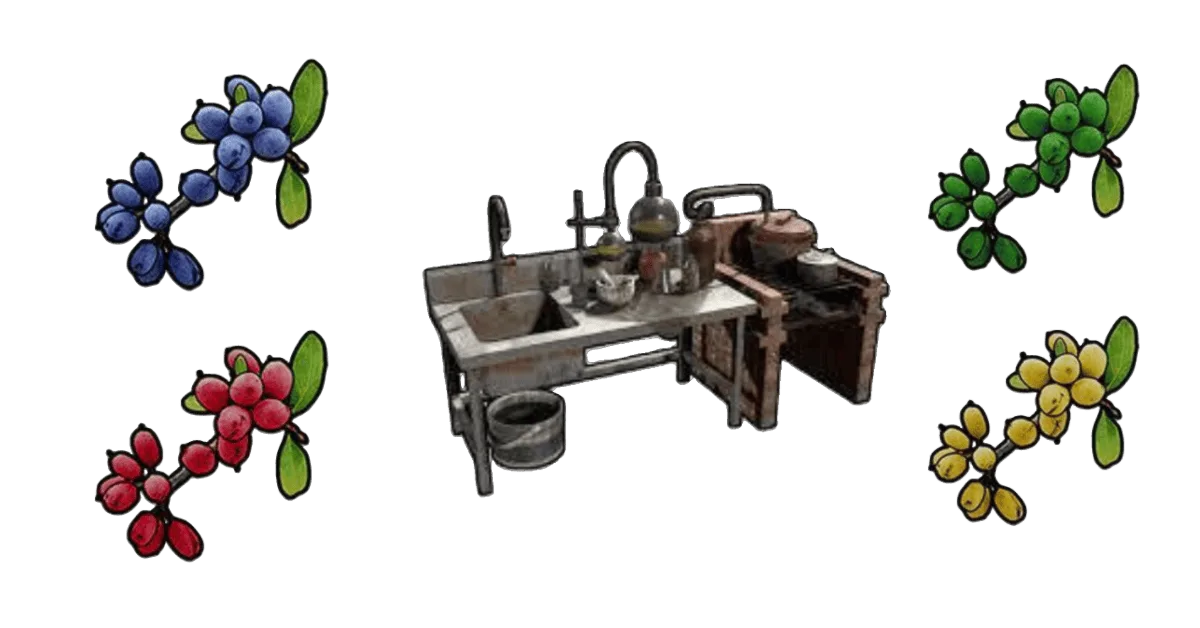
The mixing table brews teas from berries. Buy one at Bandit Camp for 125 scrap, or craft it at a level 1 workbench with 200 metal fragments and 100 stones. Put it somewhere a raider cannot easily reach.
Key points
- The mixing table is the tea station. That is its job.
- 125 scrap at Bandit Camp, or 200 metal fragments and 100 stones to craft.
- Berries are the input, and growing them beats foraging for them.
- It is a deployable, so anywhere a raider reaches it, they take it.
- Most valuable to players who gather a lot. Skippable on short wipes.
What a mixing table is for
The mixing table is an unassuming workbench that most players walk past. Its purpose is brewing: it takes berries and other ingredients and turns them into teas, which grant temporary buffs.
That makes it a support station rather than a combat one. It does not make you stronger in a fight directly, it makes the time you spend gathering and recovering more productive, which compounds over a wipe in a way that is easy to underestimate.
Getting one
Two routes, and which is better depends on where you are in the wipe.
- Buy at Bandit Camp
- 125 scrap. Faster in the early game, when scrap is easier to come by than a stocked workbench.
- Craft it yourself
- 200 metal fragments and 100 stones at a level 1 workbench. Cheaper if you are already sitting on metal, and does not require a trip to a monument.
Neither is expensive by mid-wipe standards. The real cost of a mixing table is the base space it occupies and the berries you need to keep feeding it.
Brewing teas
Teas are made from berries, which come from bushes around the map. Foraging works, but it is slow and unreliable. If you plan to brew regularly, grow your own: berry seeds in planters give you a steady supply without a scavenging run every time.
Different berries feed different recipes, and teas come in tiers, with stronger versions giving a larger effect for a shorter or longer duration depending on the tea. The practical approach is to pick the one or two teas that match how you actually play, and keep those stocked, rather than trying to brew everything.
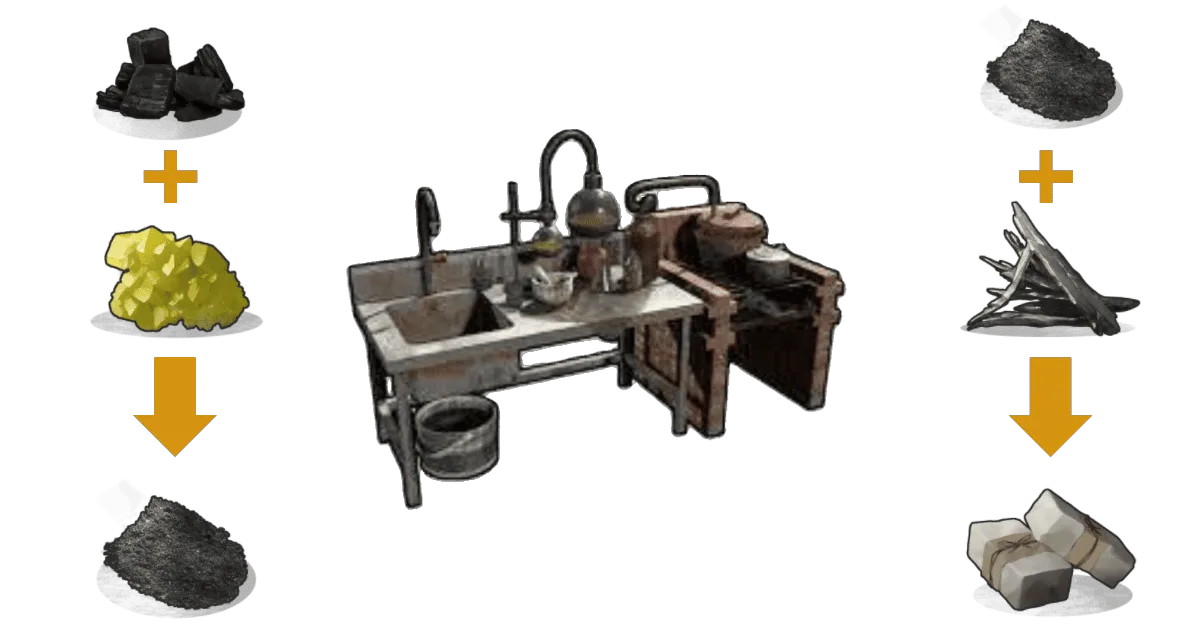
A common misconception worth clearing up: the mixing table does not craft gunpowder, explosives or ammunition. Those are workbench recipes. If you came here looking for a satchel or rocket recipe, the mixing table is not the station you want.
Where to put it
A mixing table is a deployable like any other, which means it belongs to whoever is standing next to it after a raid. Where you place it matters as much as owning one.
- Loot room. Behind the same doors as everything else you would rather not lose.
- Airlock. Convenient for use on the way out, still protected by at least one door.
- Not the ground floor by the front door. Obvious, and yet extremely common.
A well-protected mixing table makes the base more efficient without adding to your raid surface. A badly placed one is a free gift with a 125 scrap value attached.
Is it worth the space
Honestly, it depends on how you play.
- Worth it if
- You gather a lot, you play long wipe cycles, or you have a group where one person can take on the planting and brewing as a job.
- Probably not if
- You play short weekly wipes, you spend most of your time raiding rather than farming, or your base is tight on space.
The most common failure mode is building one, using it twice and then never touching it again because you have no berry supply. If you are going to commit, commit to the planters as well. The table itself is the easy part.